Two Teams, One Task, No Owner
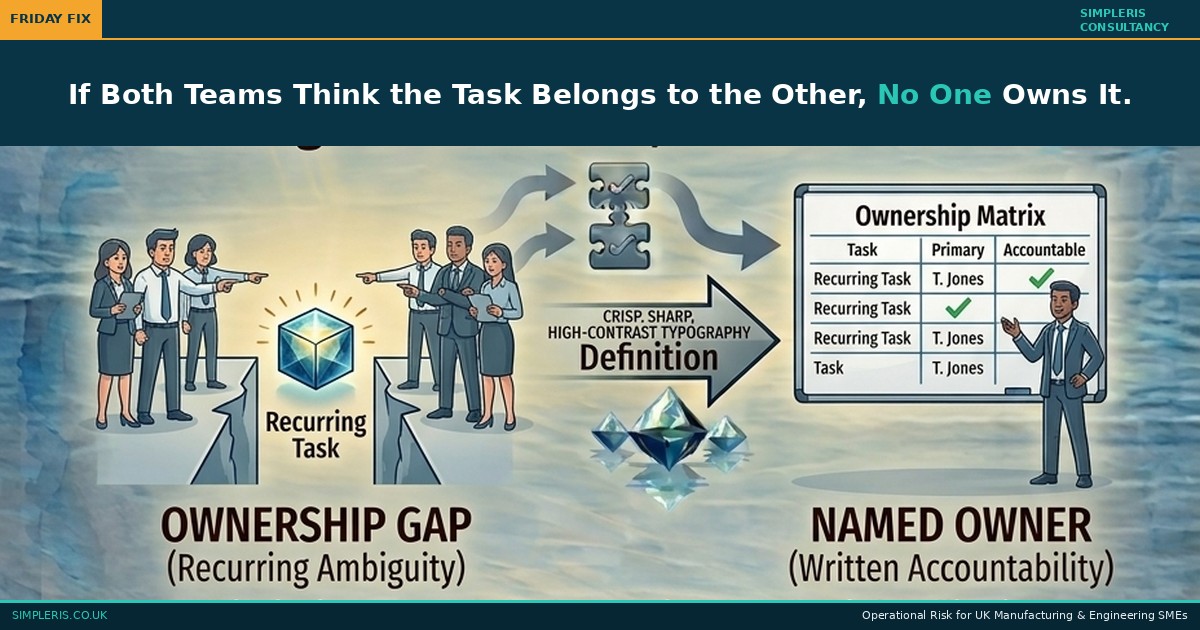
There is a task that happens every week. Both teams know it needs to happen. When it does not, both teams assume the other one dropped it. When it goes wrong, both teams explain why it was the other team's responsibility. No one is lying. No one has been given a straight answer about who owns it.
Pain: Two teams disagree about who owns a recurring task.
This is ownership and decision clarity risk. The task was never formally assigned — it was assumed. Over time, both teams developed a version of events where they handle their part and hand off to the other. The handoff is where it breaks, because neither team owns the whole thing and neither is certain where their responsibility ends.
The underlying problem is not conflict. It is ambiguity. When ownership is unclear, teams default to the narrowest interpretation of their own role. That is rational behaviour in a system that has not defined the boundaries. The task falling through the gap is a design outcome, not a people problem.
Fix: Hold a 15-minute "who owns what" session and write the answer down.
Get both teams in a room, or on a call, for 15 minutes. Name the task. Ask who owns the outcome, not just who does a part of it. Write the answer down and put it somewhere both teams can find it. That single written record removes the ambiguity that makes the gap possible. Establishing clear ownership for recurring work is one of the core steps covered in the SYSTEMology process that Simpleris uses with manufacturing and engineering businesses.
What is the one recurring task in your business where two people each think it belongs to the other?
Related: The Owner Was Named. The Date Passed. Now What?
This post is part of the Friday Fix series — one operational fix, every week, for founders and MDs of growing manufacturing and engineering businesses.