The Owner Was Named. The Date Passed. Now What?
The meeting ends well.
The team agrees, the room is energised, and everyone leaves knowing what needs to happen.
A week later, the same conversation is starting again.
Pain: Everyone says yes in the meeting and nothing happens after.
When a meeting ends without naming a single owner, the decision is still shared. Shared decisions belong to no one. Everyone assumes someone else is moving it forward, or that it will come up at the next meeting. It does. And again.
This is Ownership and Decision Clarity risk in practice: not conflict or disengagement, but the quiet failure of no one being explicitly responsible. The team is not the problem. The structure is. Nobody was asked to own the outcome, so nobody does. The founder ends up chasing it because they are the only person in the room who cannot let it drop.
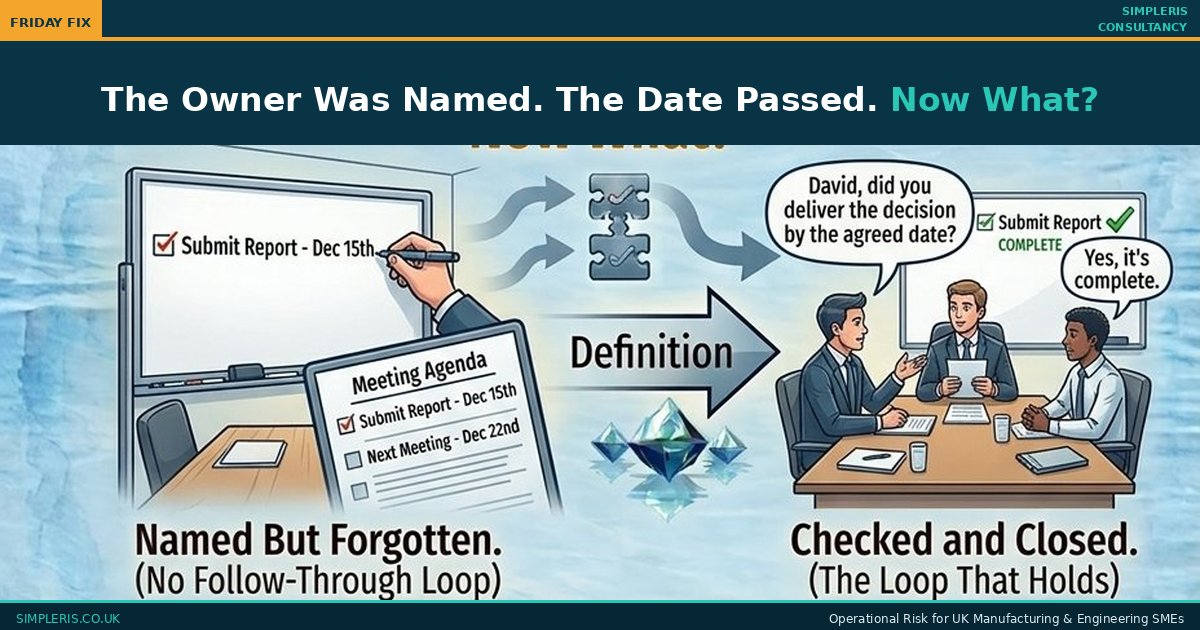
Fix: End every meeting with one decision, one owner, one date.
One decision means a defined outcome, not a direction or a theme. One owner means one name spoken out loud, not "the team" or "everyone." One date means a specific deadline, not "soon" or "by end of Q3." When those three elements leave the room together, the decision has somewhere to go.
Follow-up conversations get shorter because the answer is either there or it is not. The founder stops being the default memory of every meeting. Over time the team learns that decisions made in the room are decisions that move, and that changes how they show up the next time around. This is what operational design that holds looks like in practice.
How do your meetings end right now? With a name on the action and a date on the calendar, or with a shared nod and good intentions?
Related: A Decision Sat Three Days Without Being Made. That Is Not Indecision. That Is Undefined Ownership.
Browse more in the Friday Fix series.