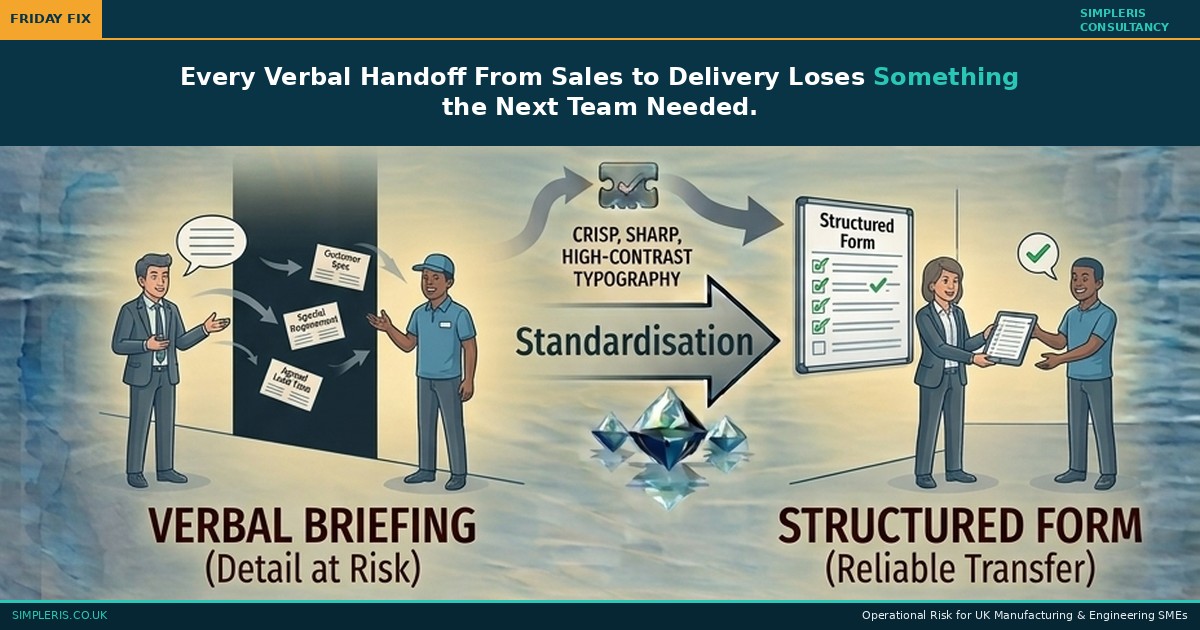
Replace the Verbal Handoff from Sales to Delivery with a Structured Form
The salesperson finished the call, talked to the delivery team for three minutes in the corridor, and moved on to the next thing. The delivery team got the order. They did not get the customer's specific requirement about the packaging. Or the agreed lead time that was different from the standard. Or the contact name at the customer's end who handles goods in. They found out later, when it mattered.
Pain: The handoff from sales to delivery lost a key detail again.
This is flow and handoff risk. Work passes between teams at the point where the context lives in one person's head and has not yet been transferred reliably to the next. The verbal briefing feels like the efficient choice because it is fast. The problem is that speed and reliability are not the same thing. What gets said is not always what gets heard, and what gets heard is not always what gets acted on.
The lost detail is not a communication failure. It is a system failure. There is no structure to capture what needs to transfer. The system produces exactly the result its design allows for.
Fix: Convert the handoff into a structured form, not a verbal briefing.
A structured handoff form does not need to be elaborate. A short checklist of the fields that matter at every handoff, customer contact, special requirements, agreed lead time, any commitments made outside the standard, is enough. The form takes the same time as the conversation and transfers everything reliably, every time. The verbal briefing can still happen. The form is what makes it stick. This is the kind of process design that sits at the core of the SYSTEMology work Simpleris does with manufacturing and engineering businesses.
What is the detail that keeps getting lost between your sales and delivery teams?
Related: Three Customers Chased for Updates Yesterday. Status Is Not Being Managed. It Is Being Reacted To.
This post is part of the Friday Fix series — one operational fix, every week, for founders and MDs of growing manufacturing and engineering businesses.