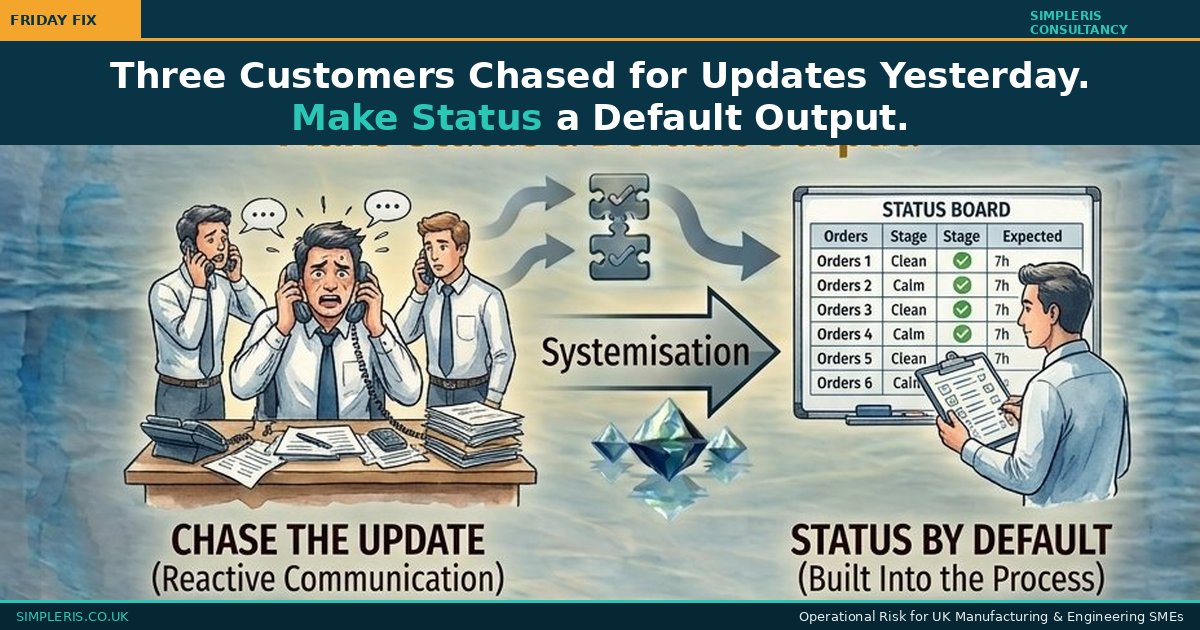
Three Customers Chased for Updates Yesterday. Status Is Not Being Managed. It Is Being Reacted To.
Three customers called for updates yesterday. None of them had been told anything was wrong. None of them should have needed to call. But no one had sent an update, because sending an update is not built into the process.
Pain: Three customers chased for updates yesterday.
When customers chase, it is a sign that status is being managed reactively. Information moves through the business, but it does not automatically reach the people who need it on the outside. This is flow and handoff risk: the gap between stages where work passes hands and the customer gets left in silence.
The root cause is not that your team forgot. It is that there is no moment in the process where an update is the required next action. It happens when someone remembers, when a customer calls, or when a problem is serious enough that silence is no longer possible. That is reactive. It costs your team time they did not plan for, erodes customer confidence, and creates pressure that compounds as order volume grows.
Fix: Make status a default output.
Find one point in your current process where status is consistently known. It might be despatch, job completion, or the point where an order moves from production to delivery. At that point, add a single step: send a one-line update to the customer. It does not need to be elaborate. It needs to be automatic and consistent.
When status becomes a default output at a defined stage, customers stop chasing. Your team stops fielding unexpected calls. The operation looks more professional without doing more work. Tie this into your systemology review or look at related services that can help you map where the gap sits.
How many updates go out in your business because someone remembered, rather than because the process requires it?
Read the full Friday Fix series at Simpleris Insights.