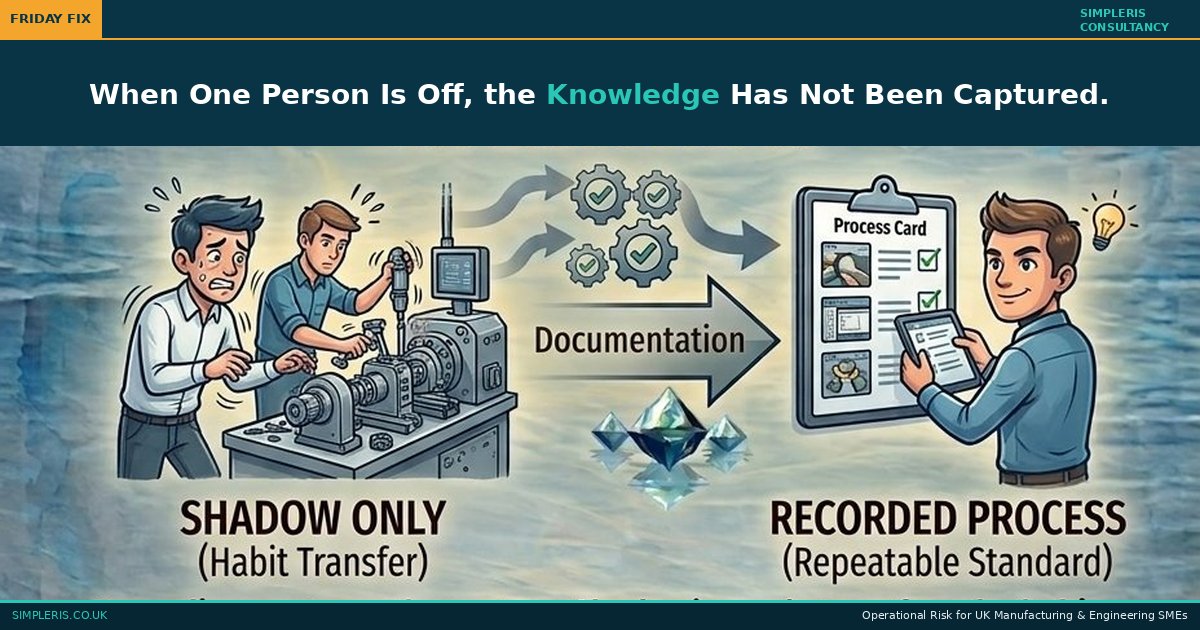
When the Line Gets Twitchy Because One Person Is Off, the Knowledge Has Not Been Captured
Your best operator took a day off yesterday. Nothing broke. But the line got twitchy. People checked with each other more than usual. A straightforward decision took longer than it should. You noticed. Your team felt it.
Pain: Best operator off, line is twitchy.
The knowledge of how to run that process well lives in one person. When they are present, everything flows. When they are not, the team works around the gap. This is key person dependency. The real risk is not the twitchiness on that one day. It is what happens when that person leaves, takes extended leave, or cannot return.
Most businesses respond by cross-training. They put someone alongside the key person and expect the knowledge to transfer. It rarely does cleanly. What transfers is the habit, not the understanding. The shadow can perform the steps but cannot explain why they happen in that order, or what to do when something goes wrong.
Fix: Record them, don't shadow them.
The next time your key operator runs a critical process, capture it on video. Not to monitor them. To preserve what they actually do, in sequence, in the order that works. That recording becomes the basis for a written standard: something to train from, something to update, something that stays in the business when the person does not.
Three minutes of recording and a brief written summary gives you more transferable knowledge than a week of shadowing. Add it to your systemology process library or a shared folder your team can access. The goal is not to replace the operator. It is to make the business less fragile without them.
Is there a process in your business that only runs reliably when one specific person is there?
Read the full Friday Fix series at Simpleris Insights.