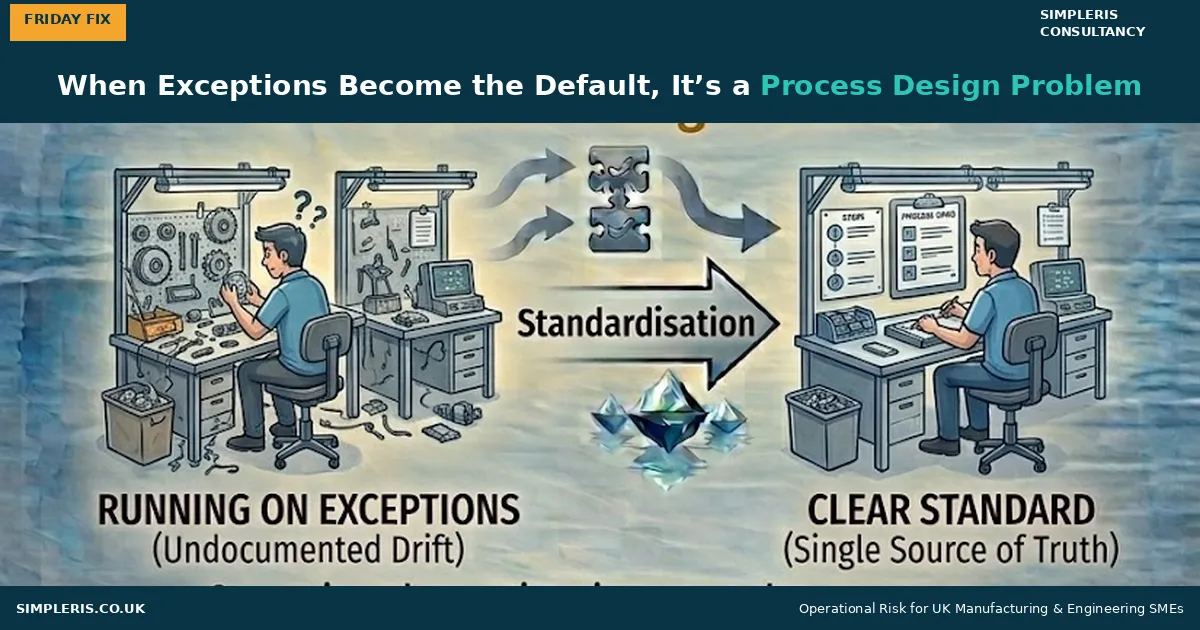
The Exception That Became the Rule
One of your team made a call to keep a job moving. It worked. Nobody went back to say whether it was a one-off or the new way.
Pain: A small exception became how you always do it.
This is one of the quieter ways process consistency breaks down. Exceptions are not the problem. What creates risk is when exceptions go unreviewed.
Over time, two or three versions of the same process exist side by side. Different people follow different ones. No one is sure which is current. The written standard and the real-world standard have diverged, and no single person made a decision to let that happen.
This is Process Consistency Risk. Not a people problem. A design gap. The process was never updated to reflect what actually happened, so reality and the standard now point in different directions.
Fix: Decide whether it's the exception or the new rule, then update one of them.
This is not a big exercise. It is a single decision about a single case. If the exception was justified at the time but the original approach is still correct, close it out and restate the standard so the team knows it was a one-off. If the exception turned out to be better than what came before, formalise it, update the process, and brief the team so everyone follows the same version.
The goal is not a perfect process. It is a single, current version that everyone follows. If you have been meaning to look at your process documentation, this is a natural entry point. One exception reviewed gives you a cleaner standard and a habit. Do it once well and the next one takes less time.
What exceptions in your business have quietly become how you always do it?
Read more Friday Fix posts at simpleris.co.uk/insights.