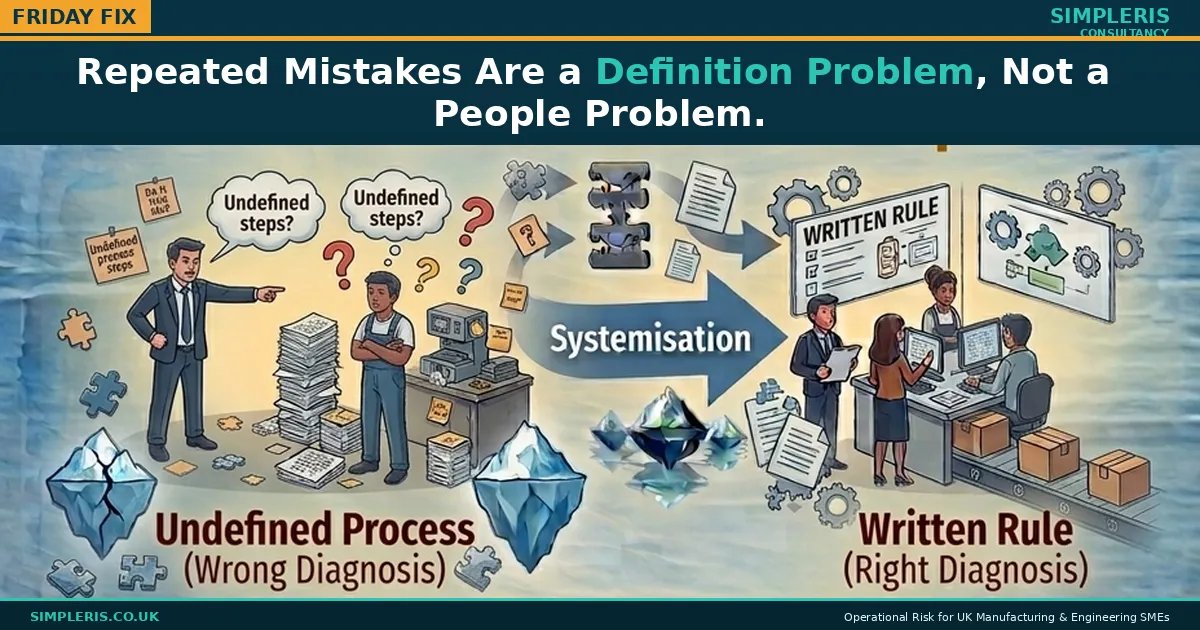
Undefined Processes Fail People, Not the Other Way Around
When the same person makes the same mistake on the same task two months in a row, the instinct is to manage the person harder. It rarely works. Look at what they were given to work with and the answer is usually different.
Pain: The same person keeps getting blamed for the same mistake on the same task.
The phrase "people don't fail processes, undefined processes fail people" describes most of these moments. The team member did not lack ability or care. They lacked a written rule that told them how this case should be handled, who decided, and what good looked like. In the absence of that rule, they made a sensible guess. The guess was wrong. The mistake repeats because nothing has changed about the gap they were filling.
This matters because it changes what you fix. If you treat the mistake as a people problem, you manage harder, train harder, or replace someone, and the next person hits the same gap. If you treat it as a definition problem, you write the missing rule, publish it where the team checks, and the same mistake stops repeating regardless of who is doing the task.
Fix: Find the undefined step, write the rule, publish it where the team checks.
Take the most recent repeat mistake in your operations. Where was the gap? What decision did the person have to make in their head every time because the team had not agreed an answer? That gap is the missing rule. Write it down in plain English, specific enough that the next person who walks into the role can apply it. Publish it where the team actually looks.
You have just removed one repeat mistake from your operations without changing a single person. The same fix protects every future person who walks into that role. This is operational risk reduction at the design level, exactly what SYSTEMology builds across the business.
Where did a lack of clarity affect your team this week, and what missing rule was sitting underneath it?
Related: Repeat It, Systemise It
Related: Clarity Is an Operational Requirement, Not a Luxury
Related: Write the Steps. Remove the Friction. Free the Team.
Related: Quality drops every time the senior tech is off
More in the Friday Fix series.