Onboarding Is a System, Not a Hope
There is a moment in most growing UK manufacturers when a senior team member says "I have been training the new starter all week and they are still asking me the same questions." The natural read is that the new hire is slow. The honest read is that the onboarding is improvised.
Pain: Your last new hire is four weeks in and still asking the same questions.
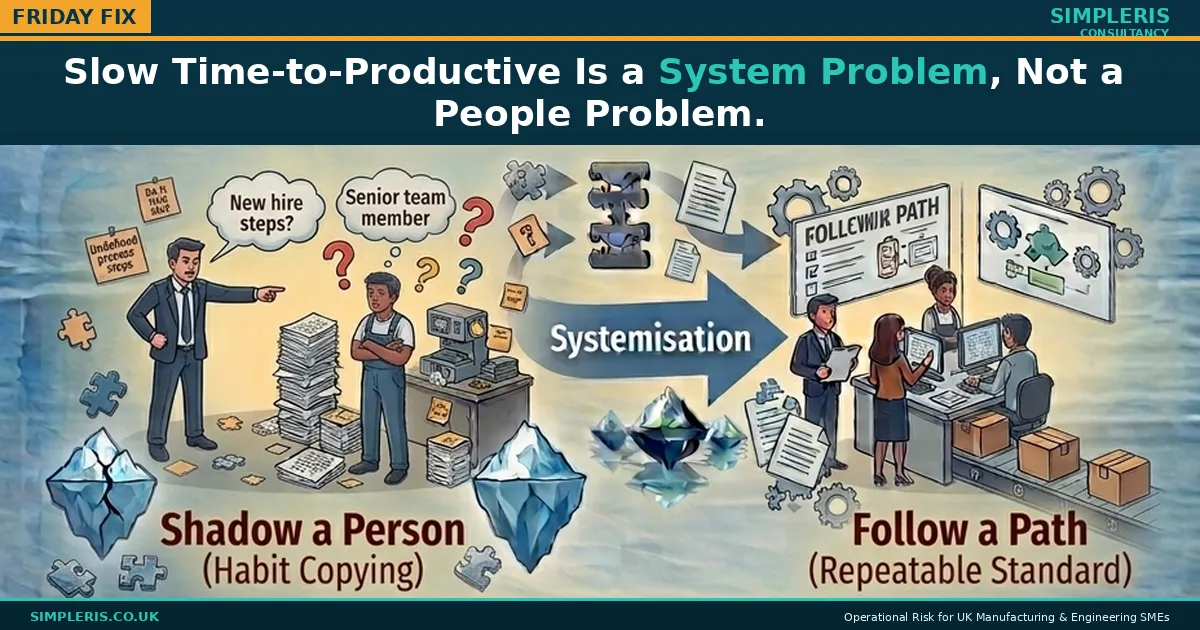
Onboarding by shadowing has a hidden cost that grows with the size of the business. The senior who is doing the shadowing was hired to do their job, not to be a permanent reference library. The new hire learns whatever happens to come up that week, in whatever order, with whatever interpretation the senior gives that day. Two new hires shadowed by the same senior can come out with two different versions of "how we do it here". That is onboarding and enablement risk showing up at the work.
The risk compounds. Time to productive is longer than it needs to be. The senior's own output drops while they teach. The new hire's confidence stalls because they cannot tell what is canonical from what is the senior's personal habit. By the time the new hire is fully effective, the cost in lost output and senior attention is already significant.
Fix: Replace shadowing with a one-page written onboarding path the new hire owns.
The path does not need to be perfect. It needs to exist. One page, week by week, listing what the new hire learns, who they learn it from, and what good looks like at the end of each week. Publish it where the new hire can find it. Now they can self-pace. The senior steps in where the path says they should, not whenever the new hire is unsure. The same path serves the next new hire, and the one after that. Each version gets sharper.
This is the same pattern at the heart of SYSTEMology: convert tribal knowledge into a written standard the team can follow without the founder or the senior in the room.
What onboarding or handover felt messy this week that one written page would have prevented?
More in the Friday Fix series.